
Integrating coaching in academic work
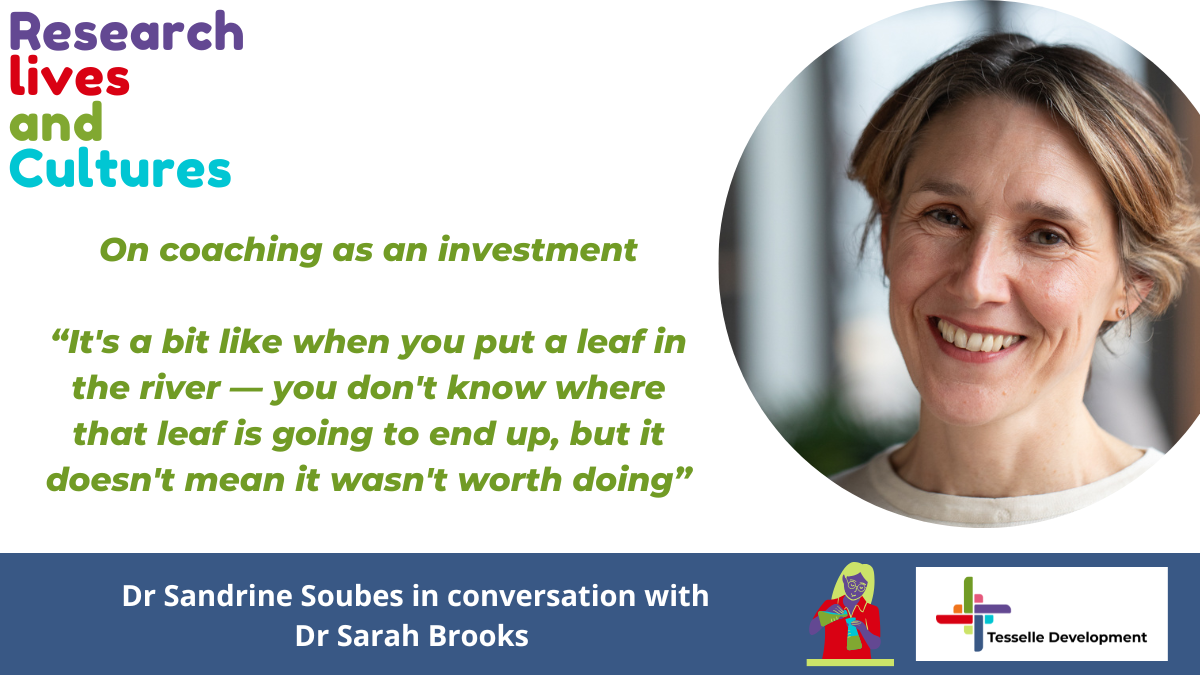
With Dr Sarah Brooks
Sarah’s entry into academic work came after several years working in the corporate sector as a management consultant. She was disillusioned working in this environment and started a part-time course in Psychology at the Open University. This course opened her awareness that developing people was central to her interests. She pursued this with a Master’s in Psychology. It was during this early period of uncertainty about the kind of career to pursue next that she experienced a coaching conversation. This early conversation helped her navigate her career decisions.
Even though she returned to consultancy work after her Master’s, she trained in coaching skills whilst still a consultant and later continued with a formal coaching qualification and accreditation. Her combined interest in coaching and developing people led her to undertake a PhD on voice and silences in upward communication in the workplace.
Sarah has chosen to align her academic role with her growing interest in coaching. Instead of splitting these two parts of her life and professional identity, she has found a way of bringing coaching as a core anchor that underpins everything she does.
She describes that it felt bold and daring to have coaching as a visible anchor in her academic focus. She started to talk to other people about this integration of coaching and academic research. Hearing others share that her integration was thought-provoking helped her build confidence that this integration made sense. Interestingly, her research thread over the years has been about finding voice. This integration of her coaching into her academic work has been about finding her own authentic voice and research niche, as an academic.
More about Sarah
Dr Sarah Brooks is a senior lecturer in Organisational Behaviour in the Management School at The University of Sheffield. Sarah combines coaching in her work, in different ways. She is teaching undergraduate students to gain thinking tools for career development planning, and she integrates coaching into her research portfolio, for example, with a project using coaching as a route to voice, for individuals who have experienced sexual harassment. Sarah has also built a private coaching practice called Powerful Dreaming.
https://sheffield.ac.uk/management/people/academic-staff/wp/sarah-brooks
Listening to our conversation will prompt your thinking:
How coaching conversations at critical career junctures can help ease decisions and transitions
How to bring together different parts of yourself to build your research niche and your authentic voice as an academic
How coaching skills can be woven into so many levels in academic lives
“ Big, hairy, audacious goals. These are the really big things that you don’t even dream might happen, but you’re gonna go for them anyway because it’s a really great thing to strive for.
I thought that integrating coaching into my teaching and research was the boldest, most daring thing that I’d ever done. ”